Knowledge in Its Own Context
Historical herbal traditions were not early, flawed versions of contemporary pharmacology. They were coherent, highly structured intellectual systems grounded in their own philosophies of nature, elements, and balance.
Major Botanical Intellectual Traditions
-
01
Greco-Roman Humoralism
The Four Qualities: Hot, Cold, Wet, Dry
Galenic doctrine classified every plant according to degree of intensity across four primary qualities. Rosemary was hot and dry in the second degree; cucumber seeds were cold and wet in the third degree.
-
02
Islamic Golden Age Scholarship
Translation, Empirical Revision, and Bimaristans
From the House of Wisdom in Baghdad to Cordoba, physicians such as Al-Razi (Rhazes) and Ibn al-Baitar tested inherited Greek assertions against real observational outcomes, expanding plant catalogs with African and Indian specimens.
-
03
South Asian Ayurvedic Compendia
Charaka and Sushruta Samhitas
Formulated around the balance of the Tridosha (Vata, Pitta, Kapha), Indian classical texts classified plants by taste (Rasa), post-digestive effect (Vipaka), and potency (Virya), preserving hundreds of regional formulas.
-
04
North European Monastic Gardens
The Physick Garden and Saint Benedict’s Rule
Monasteries like St. Gall maintained isolated infirmary plots (*herbularius*). Herb selection was guided by Christian charity, Latin translation of Roman agricultural handbooks, and local oral woodcraft.
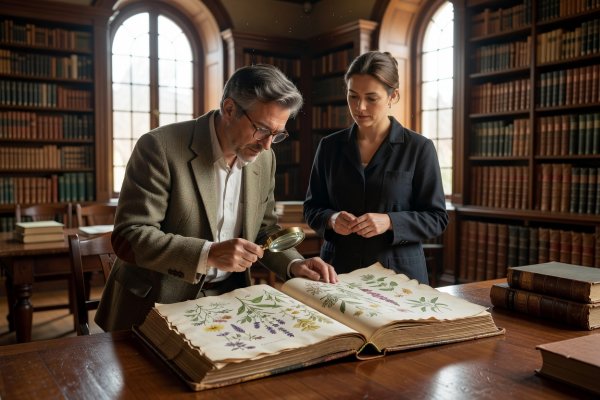
Avoiding Whig History
Viewing historical traditions solely through the lens of what modern science has "validated" distorts our understanding. The goal of botanical history is to understand how ancient people reasoned about living organisms within the intellectual boundaries of their era.